Stones · 4 min read
What is moissanite? Origin, hardness, sparkle
A stone in its own right, neither diamond nor imitation: where it comes from, what makes it so hard and so sparkling, and how to care for it.
Moissanite is silicon carbide: a stone in its own right, neither a diamond nor an imitation of one. Exceedingly rare in nature, it is now made for jewellery, which puts it within reach.
Where its name comes from
The French chemist Henri Moissan identified it in 1893 in the fragments of a meteorite that fell in Arizona; it bears his name. Natural crystals are tiny and far too rare to be cut: the moissanites in jewellery are made.
A very hard stone
On the Mohs scale, which ranks minerals by their resistance to scratching, it reaches 9.25: just behind diamond (10), ahead of sapphire (9). In everyday wear, it hardly scratches at all and keeps its polish.
A sparkle full of fire
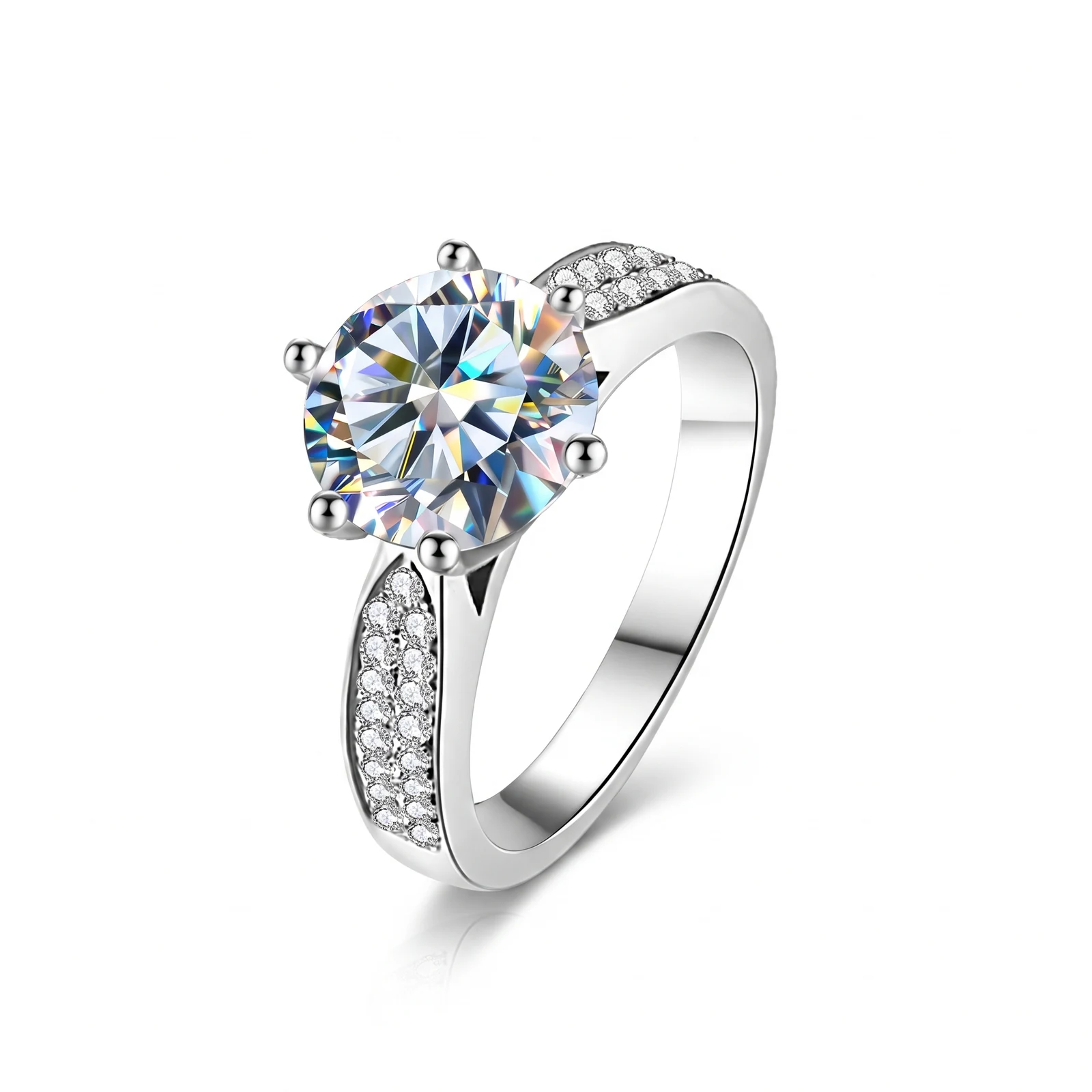
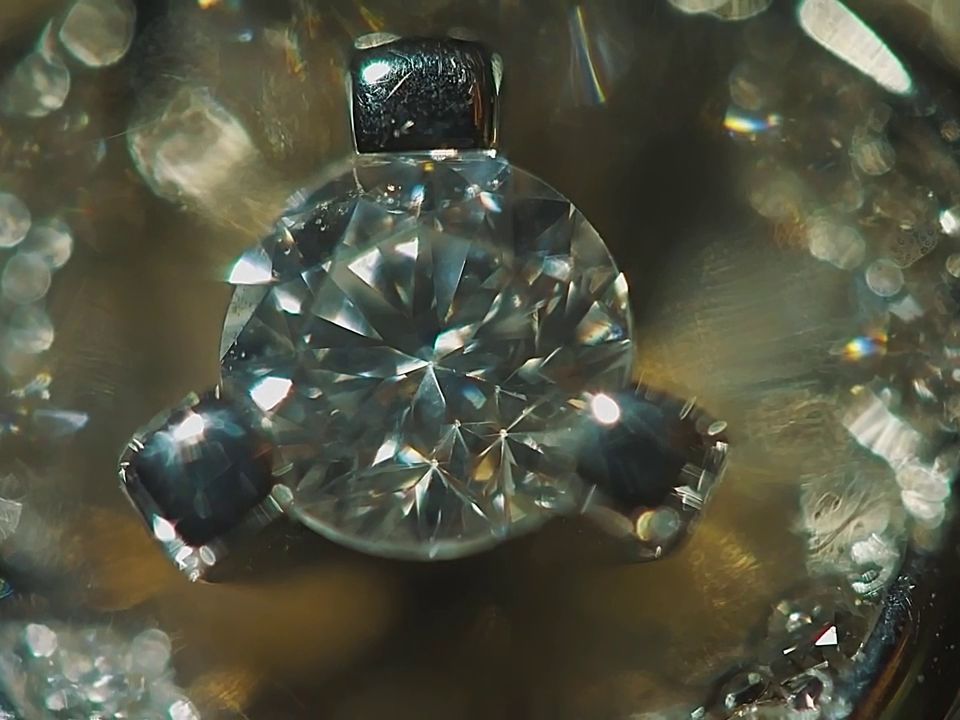
It disperses light more than diamond does: it sends back more flashes of colour, the rainbow “fire” you see in sunlight or under a lamp. That is what sets it apart at first glance.
Colour and clarity
Jewellery moissanites are most often stated as colourless and very clear. These descriptions come from the stone's manufacturer; each jewel's page shows what is stated for its stone.
Its price
For the same size, a moissanite costs a small fraction of the price of a natural diamond. A jewel's price depends above all on the weight of the stone and on the metal: our article on the price of a moissanite ring explains what makes it vary.
Caring for it
A rinse in warm soapy water and a soft brush are enough to bring back its sparkle. It is mostly the metal around it that needs a little care: our article on caring for silver and moissanite jewellery explains how.
Moissanite or diamond?
A standard diamond tester can confuse the two stones; a suitable tester tells them apart in a few seconds. We never present moissanite as a diamond: our article “Moissanite or diamond” compares the two in detail.