Stones · 6 min read
What is moissanite? Origin, properties and price
A stone first found in a meteorite, now created in the laboratory: what moissanite is, how it looks on the hand, and why its carats do not read like those of a diamond.
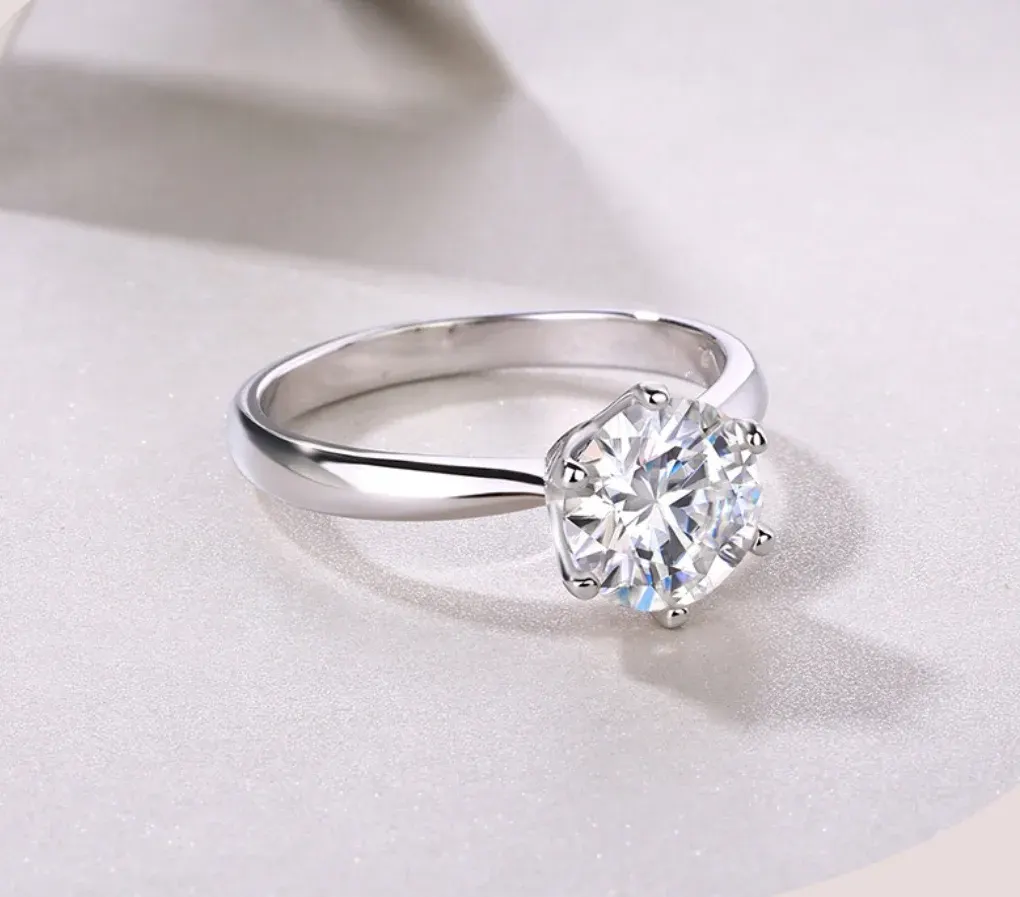
Moissanite is a precious stone in its own right, increasingly chosen for engagement rings and everyday jewellery. It is not a diamond, nor an imitation of one: it is a different mineral, with qualities of its own.
A mineral from a meteorite
In 1893, the French chemist Henri Moissan discovered tiny crystals in fragments of a meteorite that had fallen in Arizona. He first took them for diamond; they were in fact silicon carbide, a compound of silicon and carbon. The mineral would come to bear his name: moissanite.
A stone created in the laboratory
Natural moissanite is so rare that no crystal large enough for a piece of jewellery has ever been found. All gem-quality moissanite is therefore created in the laboratory, using a technique developed in the late 1990s. It is a synthetic stone, and it must be sold as such: that is how we present it.
Very hard
At 9.25 on the Mohs scale, moissanite is one of the hardest stones, just behind diamond (10) and ahead of sapphire and ruby (9). It resists everyday scratches and withstands heat, so it can be worn every day without being spared.
More fire than diamond
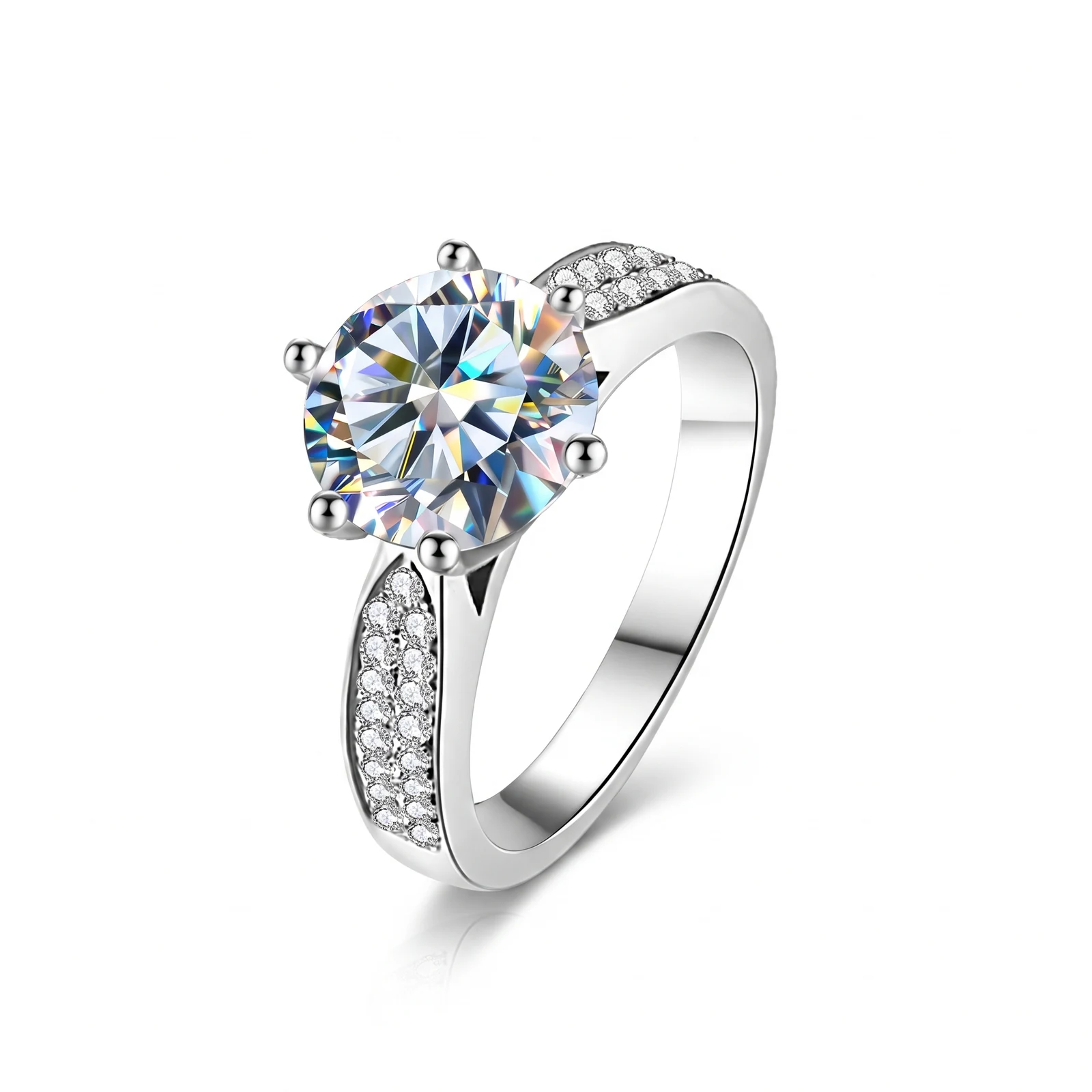
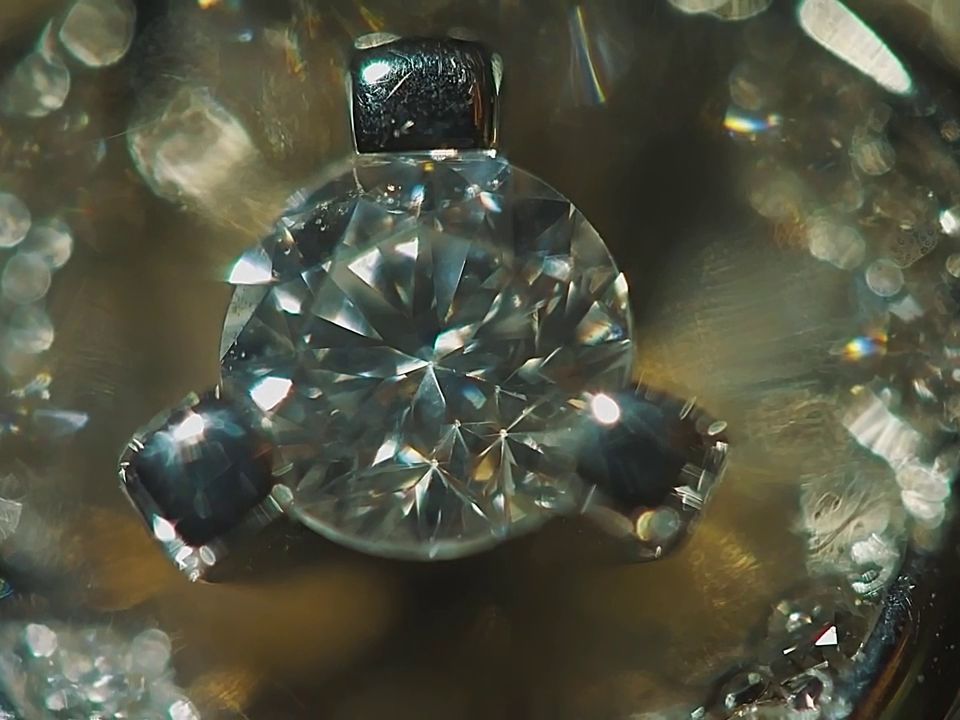
It refracts light more strongly than diamond and disperses it more than twice as much: it returns more flashes of colour, especially under a spotlight or in sunlight. That is its signature. On a one-carat stone, this brilliance is easily mistaken for a diamond's to the naked eye; on a larger stone, it is more visible.
“Diamond-equivalent” carats
Moissanite is slightly lighter than diamond: at the same size, it weighs about 10% less. In the trade, the weight quoted is therefore often the one a diamond of the same diameter would have. A “1 carat” moissanite thus measures 6.5 mm, like a one-carat diamond. It is the diameter, given on our product pages, that truly tells you the size of the stone.
Its price
For the same diameter, a moissanite costs a small fraction of the price of a natural diamond. You can therefore choose a larger stone, or put your budget towards the setting. In return, it has no comparable resale value: you buy it to wear it.
The certificate
Many moissanites come with a certificate, often from the GRA laboratory, and a number engraved on the girdle of the stone. This document describes the stone; our article on the GRA certificate explains what it attests and what it does not say.