Guides · 4 min read
Tennis bracelet (rivière): how to choose and wear it
An unbroken line of stones around the wrist: the right length, the right width, and what to check on the clasp.
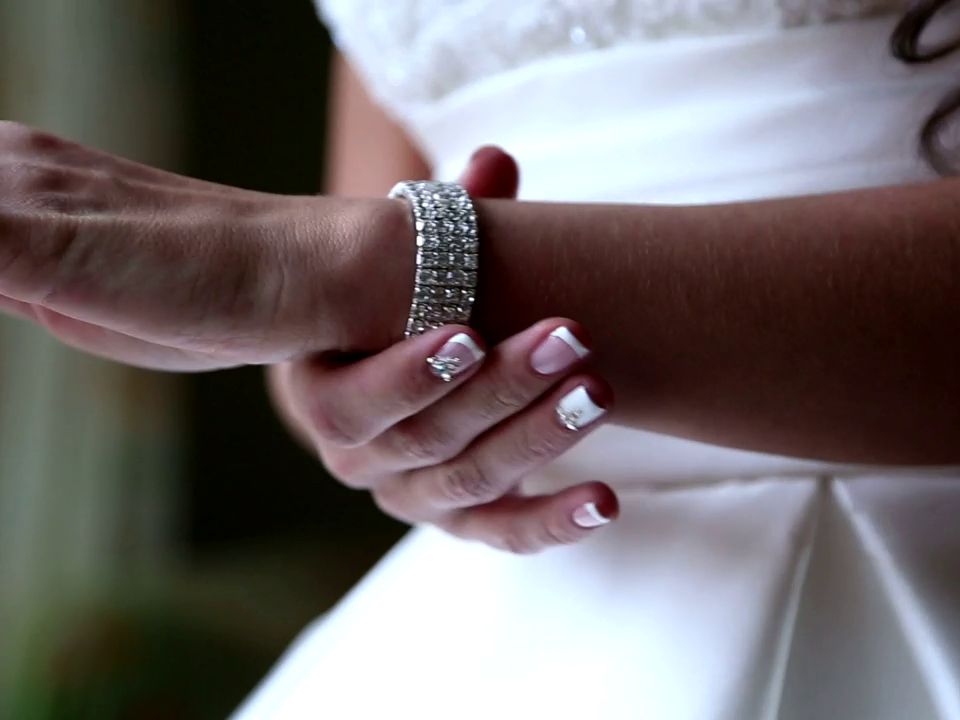
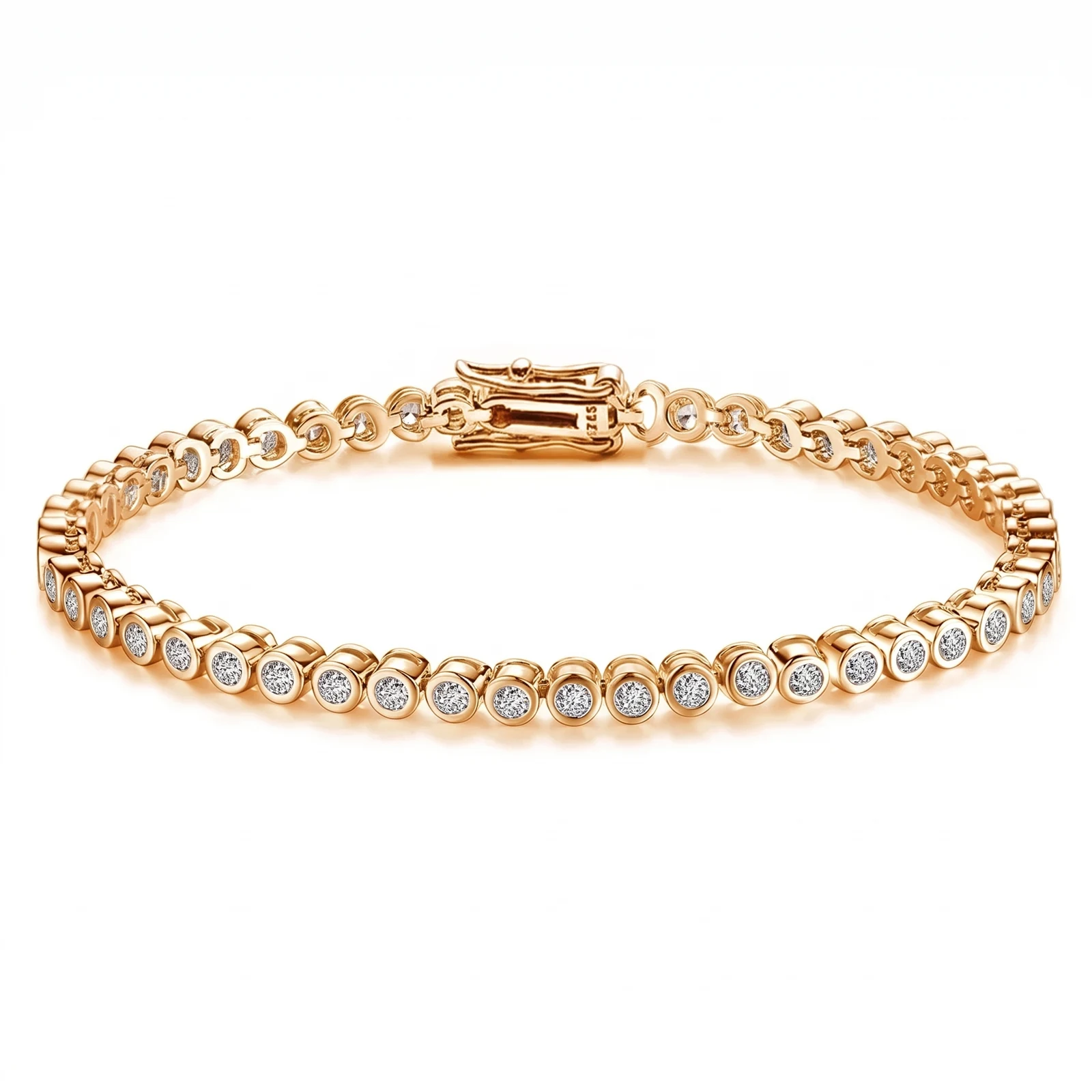
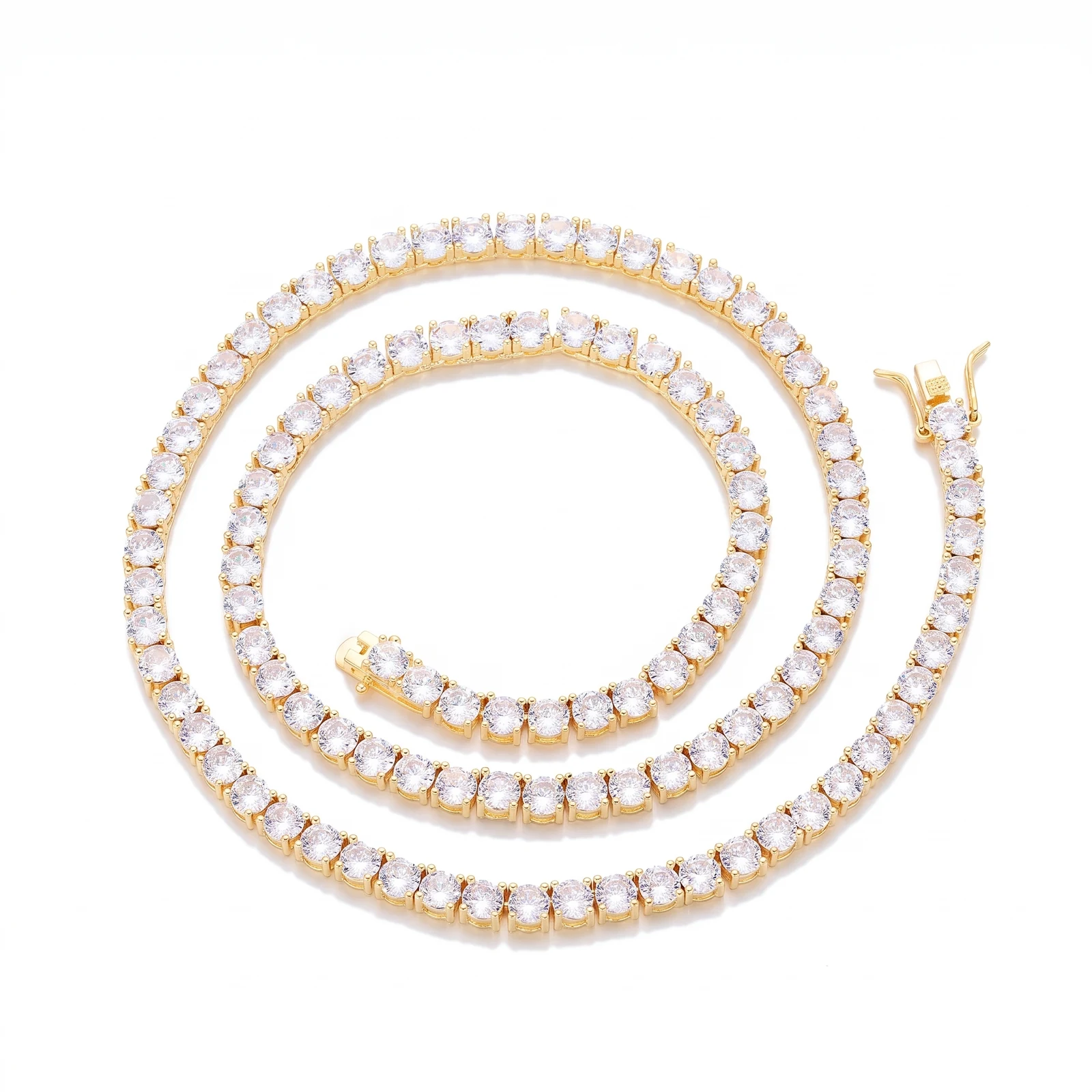
The tennis bracelet, also called a rivière bracelet, is a single line of stones of the same size, set one against the next along its whole length. It is a supple piece that follows the wrist, and one of the few you can wear as easily with a watch as with evening dress.
The length
Measure your wrist with a tape measure, just above the bone, then add one to two centimetres. A 15 cm wrist wears a 16 to 17 cm bracelet. Too short, and the bracelet pulls on its clasp; too long, and it turns and catches. If you are torn between two lengths, take the longer: a tennis bracelet should leave room for a finger's width on the wrist.
The width of the stones
It is given in millimetres. At 2 mm, the line is very fine, discreet, easy to layer with other bracelets. At 3 mm, it is the classic width, visible without being showy. At 4 mm and above, the bracelet becomes the main piece of the outfit — and its price climbs quickly, as it carries several dozen larger stones.
The clasp
It is the weak point of any bracelet. A good tennis bracelet closes with a box clasp backed by a safety catch — a figure-of-eight or a small chain — which holds the bracelet if the clasp opens. Check from time to time that it clicks firmly as it closes.
Every day
Take it off for sport, gardening and at night: it is not the stone that is at risk, as moissanite is practically scratch-proof, but the links, which wear with repeated twisting. A rinse in warm soapy water and a soft brush are all it takes to restore its sparkle.